Posts

The acquisition that never happened: Apple + Peloton

One of the primary reasons I held on to my Tesla stocks during the “darkest days” of the Model 3 rollout was because I was certain either Apple or Google would acquire it. This is why I was very surprised when Elon Musk tweeted today that he wanted to sell Tesla to Apple but that CEO Tim Cook refused to take the meeting. Tesla isn’t the latest Apple acquisition bet that I got wrong though. That’d be Peloton. IMO, Peloton’s rally will outlive COVID. It's on track to ~$2B in revenue at the end of this year- that’s a year-over-year (YOY) growth of 100% - and yes the pandemic has helped a lot but the company projects to hit ~ $4B by the end of 2021. Since it IPO-ed, Peloton has had all the makings of an exceptional business that would be a great candidate for Apple to acquire. I was dead certain that it would be a matter of time before that happened, especially as Tim Cook pushed to quadruple revenues from Apple Services and turn it into a $50B per year business. Peloton ticks many of...
Just Do It, A lot more direct

Nike shares jumped more than 35% since the beginning of the year. Nike is a pandemic winner and has been delivering impressive results, fueled by online sales that jumped more than 82% in the last quarter. Nike's ability to thrive during a period when physical visits to retail stores has collapsed is down to its investment in its direct-to-consumer (DTC) business. Per Statista , in 2010 about $2.5B Nike-brand products were sold directly to consumers. A decade later they sold almost $12.5B DTC – more than a third of all Nike brand revenue. The upside of DTC is alluring – it allows you to cut out the middleman (wholesale retailers) and, in theory, capture a higher profit margin for your business. But for Nike, it has been less about capturing higher margins and more about owning and controlling the full customer experience. What kind of company is Nike? They started with shoes, but their product line has extended far beyond that. They are certainly a marketing company, one of the bes...

Salesforce: Good at selling, better at buying

Few weeks ago, Salesforce announced that it's acquiring Slack for $27.7B. Is Slack a good acquisition? As mentioned in previous articles, on paper Slack is exactly the kind of company that might have "done a Zoom" in 2020 as remote work and biz communication tools exploded in usage and popularity. Thanks to competition from Microsoft that didn't quite happen, leaving its share price roughly where it was at the start of the year... until Salesforce swooped in with an offer for the whole thing. It's true that Salesforce pays its bills by helping its customers sell and manage client relationships, but its own corporate strategy has been a lot more focused on buying. The Slack deal is Salesforce's biggest yet, and it comes just 16 months since Salesforce splashed $15.7B on buying Tableau — the analytics and data visualization software. A lot of acquisitions end up being poor deals for the acquiring company. Too much ego, too much "empire-building" on the...

Walmart is not visionary but it knows how to counterpunch

It's telling that since it launched Walmart+ in September, Walmart hasn’t shared the number of customers who have joined. Even on the last earnings conference call in November, executives repeatedly dodged questions from analysts about the number of sign-ups. Most likely the numbers are disappointing or at least not where Walmart's executives would like them to be. Walmart+ is their response to Amazon Prime. So when Walmart+ launched, Walmart offered it at a discount to Prime. Amazon Prime costs $119 a year. Walmart+ costs $98 a year with the caveat that free shipping is available on orders greater than $35. Typical Walmart. It figured if it bests the competitor (Amazon in this case) on price then customers will flock to Walmart+. However,  what the biggest discounter in the world missed is that customers - especially Prime customers - value speed and convenience the most. Prime's most popular feature is its free and fast deliveries, even for items as cheap as a toothbrus...

The copied becomes the copier

After years of being the victim of "borrowed features" now it's Snapchat that's doing the borrowing. Snapchat's new product Spotlight is aimed squarely at competing in the short-form video space where TikTok is having so much success.To encourage creators to join Spotlight, Snapchat is using a not-so-subtle carrot. For the rest of the year they will share out $1m every day to creators who make the most viral videos. That sounds like an enormous amount to give away — but because Snapchat has become increasingly efficient at monetizing its user base, it's actually a reasonable bet. Assuming they run the campaign until the end of 2020 (roughly 35 days worth), that's only $35m on revenue that will very likely exceed $2bn this year. If Snapchat is able to draw some top creators to Spotlight it may be able to launch the most credible competitor to TikTok so far. Facebook's attempt, Reels, reportedly isn't doing well . Maybe Snapchat can succeed where Fa...

Airbnb is not Uber and that's great news for Airbnb

Airbnb, the house-sharing tech company, wants to go public in December under the ticker symbol ABNB. In this article, I look into the company's business model and why I'm psyched that it's finally coming to Robinhood. Airbnb can be compared to Uber. Both make more efficient use of assets that otherwise might sit idle (spare rooms, cars on driveways) but their financial performance is staggeringly different. In its most recent financial year Airbnb had an operating loss of $500M on revenues of $4.8B, roughly a -10% margin. Uber's most recent annual results? A -60% operating margin. Both Uber and Airbnb have built something that's truly unique in logistics and lodging respectively. Both created an entirely new sort of supply that didn't exist before. Both took trust - a core differentiator of the incumbents (hotels and taxis) in their verticals and digitized it. And, most importantly, the resulting commoditization happened only on their platforms and were captured...

Microsoft vs. Sony: The console battle and the gaming war

Last week, Sony launched PlayStation 5 (PS5) on the same day that Microsoft dropped its Xbox Series X and S. So much for not stealing each others' thunder ;) As far as the actual hardware specs go, they are pretty on-par with each other. However, the two warring companies are approaching the growing gaming industry very differently, and competition between them will be one of the most interesting stories to watch over the coming few years. Here's a run down of where the two companies are and the very different directions that they are taking: Sony Sony is following the traditional razor and blades model that has long characterized consoles: try and not lose too much money on the consoles, and make up the difference in game licenses, its online service, and in-game purchases. It’s a model that gamers are familiar with, even if it ends up being a pricey one. In short, Sony is treating the PS5 like a console, and gamers like gamers, just as they did last generation. So, when it la...

Popular posts from this blog

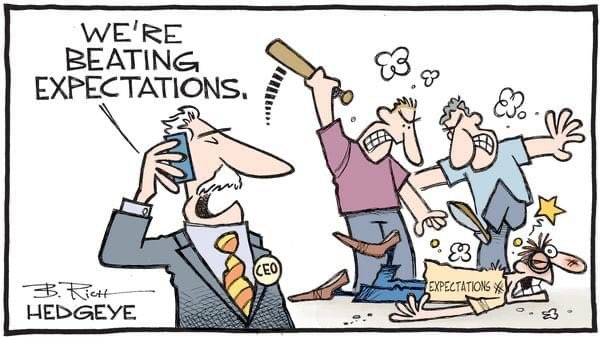
Why the stock market is beating expectations

Airbnb is not Uber and that's great news for Airbnb

Microsoft vs. Sony: The console battle and the gaming war