Posts

Disney has a wholesome, family-friendly image. Will pivoting to gambling hurt its brand?

There aren't many better times to launch a family-friendly streaming service than 4 months before everyone gets locked inside — and it showed for Disney. After launching in November 2019, Disney+ went on to hit 100 million subscribers in record time. People were watching more content than ever, and Disney felt confident it could raise its targets. It settled on a goal of between 230 million and 260 million subscribers by the end of 2024. After such a fast start, many thought that would be easy for Disney but when it reported its latest earnings Disney said things were slowing down and reported that it added just 2 million new paid customers in its latest quarter. Investors responded by sending Disney's shares down more than 7%. Investors didn't care that Parks swung back into profit or that Disney believes it is still on track to hit 230M to 260M subs by 2025. Many investors worry growth for Disney+ is tapping out. With streaming growth stalling, what can save the day for D...
Better together: WarnerMedia and Discovery

Oh, great, another streaming service. That might have been your reaction to the news that AT&T and Discovery are planning to merge their media assets together, to better take on the streaming giants of Netflix, Disney & Amazon. For the companies involved, this deal makes a lot of sense on paper. Both AT&T and Discovery, the former of which has a sprawling telecoms business, have seen relatively lackluster corporate performance in the last 5 years — which has been reflected in their share prices. This deal hopes to take the underperforming media assets from AT&T, which includes HBO, CNN and the Warner Bros. studio (responsible for Harry Potter and many other titles) and combine it with Discovery's relaxing cooking, home renovation and nature content. Although it may take a while to happen, presumably the plan is to merge the assets under one big streaming brand. That brand would have an ~80 million strong streaming subscriber base, with 15 million coming from Discove...

Peloton's management of the Tread+ has been a disaster

Today, Peloton announced that it's recalling all treadmills and its CEO John Foley finally apologized for not cooperating with the U.S. Consumer Product Safety Commission (CPSC) sooner. Honestly, as an investor, I'm shocked the CEO has not resigned yet because his handling of this crisis has been a disaster. Peloton was the epitome of a Coroneconomy thriver. Its stock ~5X'd in 2020, as its connected home fitness products flew off shelves. It has been trying to expand beyond its spin bikes — so it launched treadmills. Those are causing major problems. In March, Peloton's CEO disclosed that a child had died in an accident involving a Tread+. The CPSC said people should stop using Peloton's Tread+ if small children or pets are at home. The CPSC cited 39 incidents involving a Tread+, including instances of children and pets getting sucked underneath it. So instead of following rule #1 of crisis management, i.e overcorrect, Peloton got defensive - the company called the ...

China creates a digital currency, PayPal should be worried

China just created its own digital currency: the digital yuan (digi-yuan). It's the first major world economy to launch an e-currency. China isn't just putting cash into a virtual bank account — it's minting cash digitally, turning legal tender into lines of code. For each digi-yuan it issues, it essentially cancels a paper yuan. Unlike a cryptocurrency, digi-yuan is a state-backed currency controlled by China's central bank (like how the US $ is backed by the US gov't and controlled by the Fed). Also, unlike crypto and cash, there's no anonymity with digi-yuan. The Chinese government knows where your yuan has been. Digi-yuan gives China not more money control but also more control over everything. For example, it is testing digi-yuan expiration dates that could encourage people to spend within a certain time frame (to support economic stimulus). China uses hundreds of millions of facial recognition cameras to surveil and fine citizens for things like jaywalking...

Beware Tesla, Volkswagen is not joking

This week, the SEC announced that Volkswagen is being investigated over its “Voltswagen” April Fools debacle. So what happened? Voltswagen was the actual new name (for about 24 hours) that automotive giant announced for their US subsidiary on March 31st, in a bid to promote the company's renewed focus on electric vehicles and its new all-electric SUV. Initially leaked as an upcoming April Fools joke, the name change was later confirmed on official VW corporate channels, before company spokesman Mark Gillies said on Tuesday that the statement was indeed an early April Fool’s Day joke. For a company found guilty of lying in a big way about emissions (Dieselgate), this was a high-risk gag with poor delivery. Joke or not, VW is very serious about its ambitions for electric vehicles. Last year, between the company's 12+ brands the group delivered around 230,000 all-electric vehicles. That might only be around 2% of Volkswagen Group's total vehicle deliveries, but it is already a...

Airtags: The ultimate brand power move

Last week, Apple hosted its first event of the year and unveiled a slate of deliciously colorful products. But the star of the show was ... what we've been hearing rumors about for a very long time. Apple finally unveiled AirTags, little Bluetooth buttons you stick on things like wallets and keys to locate them (yep, just like Tile). They start at $29 each and will be available on April 30. AirTags use Apple's U1 chip — the same one used in iPhone 12. The chip will make AirTags trackers more accurate than those from Tile, Samsung, and Sony. Also AirTags use the "Find My" network, the same one used for Find My iPhone, Friends, etc. "Find My" is a crowdsourced network of hundreds of millions of Apple devices that can help users locate their missing tech through Bluetooth connection.  Bottom line: Apple’s powerful brand is a statement – that's currently limited to Apple devices. But with AirTags, people can slap expensive Apple labels on non-Apple products....

Upstart - A great long term growth stock

In fintech, Upstart is definitely not a hidden gem; its stock has risen by more than 8x since its IPO in December to hit an all time high at $165. However, among the many companies that have gone public recently or planning to do so, it stands out as one of the very promising ones. Upstart was founded to modernize and personalize the $3.6T consumer loan industry. The current loan approval process is an antiquated, one-size-fits-all process with over 90% of the creditors mainly using a FICO score to asses credit worthiness. This is resulting in less than half of Americans being able to secure affordable loans, although 80% have never defaulted and millions are unfairly rejected or pay far too much interest. Enter Upstart - a leading AI lending platform partnering with banks to expand access to affordable credit. Instead of the thirty criteria that the banks collect to make their decisions, Upstart can take 1600+. Upstart considers more unique and personal variables like education, loan ...

Silvergate was down - blame it on Coinbase

Over the past week, Silvergate Capital (SI) has lost more than 25% of its value. Is this a reason for its investors to be alarmed? I don't think so. The stock was down because investors rushed to buy Coinbase when it began trading publicly. They realized profits from SI's stock sale to diversify their exposure to crypto in the public markets. Yesterday, SI reported record earnings. SI, which serves major crypto firms such as Coinbase, Gemini and Kraken, added a record 135 digital currency customers in Q1–more than it added in all of 2020. It also reported sensational growth for SEN Leverage - it's latest product offering. SEN Leverage was the fastest growing product, with $196.5M in outstanding balance. SEN Leverage is expected to be a massive contributor in growing SI's revenues and profits. It's critical to serving clients who are looking to make leveraged bets in this current market under one roof. Bottom line: I remain bullish on SI despite the recent slump, and...

Amazon is coming to you Google Maps

If you ask which is the bigger threat to the other, Amazon or Google? Many will argue that it's Google, because it's dead set on diversifying its business and is investing heavily in promoting it's cloud business. Thus encroaching on Amazon's profit machine -AWS. I beg to differ.  As mentioned in a previous article , Amazon is already closing in on Google's advertising business and despite all Google's investments, it's clear that GCP is not going to catch up to AWS any time soon. Now Amazon is posing yet another threat to another big business for Google - Mapping. How So? AWS is Amazon's silent (but deadly) superpower. It's a "silent server" for a huge swath of the digital economy, powering the operations of millions of companies from Netflix to Slack and Shell. Last quarter  it made up over half of Amazon's total profit. Recently AWS announced a new location service called "Amazon Location". No, this is not not a real-time p...

Now is the time to get on Peloton

Although Peloton's stock debuted in late September 2019, it didn't soar until the pandemic hit. Before the pandemic, the company was growing well, but it was spending a lot of money to grow and investors were skeptical if there was enough market for its products. Then the pandemic hit, fitness enthusiasts turned to Peloton to provide them with workout options while gyms were closed, sales skyrocketed, and Peloton's stock become one of the biggest pandemic success stories. Since January, the stock has lost close to 40% of its peak value. This is primarily because of concerns that the company could return to its net-loss financials as the pandemic wanes. After all, until the pandemic, Peloton was not very profitable. As vaccines started getting rolled out many investors started to wonder if Peloton can sustain the growth it saw in 2020. I think it can. As mentioned in a previous article , I think Peloton will outlive the pandemic and continue to post strong numbers. Its moat ...

Amazon is beating up on Google and Facebook

When people think of digital advertising, they think of Google, Facebook, Twitter, Snapchat etc. But what about Amazon and Microsoft? Maybe you should just Bing it... said no one ever. Microsoft's search engine Bing is often portrayed as a bit of a joke in comparison to Google. It just happens to be one of those jokes that makes billions of dollars of revenue. Per Chartr , in 2019 while Snapchat and Twitter combined generated $5.2B in revenues, Bing did $7.5B. Basically, Bing is a $7.5B joke that's over 30% bigger than Snapchat and Twitter combined. The fact that Bing is often ridiculed, but is actually an enormous business, gives some context as to how important search actually is. It truly is our gateway to the online world, and unlike other forms of digital advertising it monetizes actual user intent. In some industries it's not uncommon for companies to pay Google $40 or $50 for every individual click on their ad (usually for phrases like "insurance", "m...

Nike: Just Do It, DTC

Even though Nike reported higher than expected third-quarter profits, its stock has been trending down since that earning call. The primary reason for the decline is sales growth, which was hurt by widespread port congestion in the United States and ongoing store closures in Europe. Although the global health crisis still leaves an overhang of uncertainty, Nike said it anticipates lockdowns will start to ease in Europe in April, and delivery windows will slowly improve in North America through the remainder of the year. But what got me so hyped about Nike is its direct-to-consumer (DTC) business which grew 20% YoY, to $4B putting Nike is on track to sell $16B DTC – more than a 40% of all Nike brand revenue. Online sales are fueling this growth. They surged by another 59% in this quarter after the 82% in the last quarter, enabling Nike to book $1B in sales online in North America for the first time. This is super impressive. As mentioned in a  previous article , Nike's ability to th...

The crypto mainstream-ification intensifies

Over the past year, Bitcoin has increased ~9x in value as corporate and retail investors have poured into cryptocurrency. In January, the crypto market hit $1T in total value (mostly Bitcoin). Now, the mainstream-ification is intensifying: Venmo-owner PayPal, which has a whopping 377M active accounts, officially launched "Checkout with Crypto" in the US, allowing users to pay with crypto at online stores. And in the coming months, PayPal will expand crypto checkout to 29M merchants. Customers with PayPal digital wallets can pay in Bitcoin, Ether, Bitcoin Cash, and Litecoin. This comes after Visa also announced that it'll allow people to use the cryptocurrency USD Coin (a US dollar-backed stablecoin) to settle payments. How will it work? Paying with crypto... but not really paying with crypto. Customers' crypto holdings will be converted into fiat currencies (like US dollars) at checkout. It's kind of like selling a fraction of your BTC, then using the sale money t...

Affirm: If you buy now, you'll pay for it later

Affirm had one of the hottest IPOs of the year. Its stock was priced at $49 in January and quickly climbed to nearly $140; that's over $40B in market cap. Since then - more precisely since reporting its first earnings report as a public company- the stock has lost over 50% of its peak value. This is despite the earnings beat. So what changed?  Back story: Affirm did forecast a wider than expected loss for 2021 which cast a dim spot over its earnings but that's not the primary reason the stock has been in a downward spiral. That's happening due to fears over increased competition and valuation going too far. Many analysts came out with what amounts to bearish ratings. Honestly, this is completely understandable considering the massive and out-of-this-world valuation for Affirm which is, after all, still a small fintech company. Also, SoFi - which has similar if not better growth prospects than Affirm - had recently signed a definitive agreement to go public via a SPAC that v...

Yum Brands is designing its stores for iPhones

KFC-owner Yum Brands just made its biggest move in a year. It acquired Tictuk - no, it's not a typo. Tictuk is a Israeli startup that lets you order food from social media and messaging apps. You can't use it to order from TikTok yet.  Back story: Yum bought Tictuk to capitalize on “conversational commerce," which makes ordering a Chalupa Supreme as easy as sending a text (or a FB message). Yum's digital sales in 2020 hit a record of $17B, up ~45% from 2019. Now it's doubling down on tech for its futuristic makeover. Tictuk is Yum's second tech acquisition in less than a month and it help revamp Yum Brands' ordering strategy and make it more digital focused. Tictuk will enable Yum Brands to achieve a truly omnichannel presence and provide frictionless ordering for customers in just a few clicks. It's very much inline with Taco Bell's announcement earlier this week to expand its "Go Mobile" restaurant remodel nationwide. "Go Mobile...

Roblox: A game worth playing for the long term

If you haven't heard of Roblox, you're probably old enough to drive and don't have kids. Roblox stock soared after it direct-listed its shares earlier this month. Since debuting on the NYSE, its shares have been strong, hovering around the $68 range. The backstory: Roblox is a free platform that allows players to create their own mini games, publish them to its marketplace (yes, monetize) and play with friends and family. It has over 8 million developers and average daily users of 37 million, according to Reuters. And most importantly, kids love it and it's been minting money: More than half of Roblox's 199 million monthly active users are under the age of 13. Roblox generated $923.9 million in revenue last year, primarily through the sale of virtual in-game currency called “Robux.” It takes a cut of the money that players spend on user-generated game upgrades. And although it has yet to turn a profit, the company expects to rake in between $1.44 billion and $1.52 b...

Everyone is winning the streaming wars!

In a little over a year, Disney+ has accrued nearly half of the number of subscribers Netflix has accumulated over the past decade. Netflix is currently sitting at a lofty 204 million — but is growing much more slowly. Disney's performance has been so phenomenal that Netflix co-CEO Reed Hastings has named Disney his top competitor. He told Bloomberg last September, “If you’d asked us a year ago, ‘What are the odds that Disney+ is going to get to 60 million subscribers in the first year?’ I’d be like 0. I mean how can that happen? It’s been super impressive execution.” For the record, Disney+ is not second. That honor goes to Amazon Prime Video which has 150 million subscribers. However, it's hard to compare it to Disney+ because Prime is a bundle of different services. After Disney, there is Hulu which has just under 40 million, and then there's a smattering around 10-30M (HBO Max, CBS, Discovery, ESPN and Peacock). Best of the rest While Disney+ has been stealing the headl...

Disney+ is quickly catching up to Netflix but it doesn't make as much money per sub

Disney+ has hit 100 million paid subscribers, just 16 months since its launch. That puts Disney roughly halfway to catching up to Netflix's subscriber base, which is currently sitting at a lofty 204 million — but is growing much more slowly. The pandemic has almost certainly accelerated the trajectory of Disney's growth, as we all ran out of things to watch pretty quickly, but even considering COVID the Disney+ performance has been remarkable. Disney originally expected to have between 60 and 90 million subscribers by 2024, the company now expects more like 230 million subscribers by 2024. Disney is adjusting well for the unexpected popularity of Disney+. It now firmly believes that its direct-to-consumer business is its top priority and it is going from an entertainment company with a streaming service to a streaming service that sells Mickey Mouse hats. So much so that it has restructured its media and entertainment divisions to focus on its streaming platform, and it announc...

Square paid $300M to get access to Jay Z and elite musicians

Square acquired Tidal to build a financial platform for artists and make Bitcoin the currency of the internet. I love Square and it's one stock that I have had in my portfolio for ages. However, I don't think Bitcoin will ever be the currency of the internet. I find it hard to believe Bitcoin will replace any currencies - yes even the weak ones. The fundamental problem for Bitcoin as a currency and as a way to pay for music - or anything else for that matter - has to do with the very thing lots of people like about it. Namely, Bitcoin's supply is controlled and limited. Because the supply is limited, when demand for Bitcoin rises (because, say, people are convinced they can get rich quick by buying it), then the value of Bitcoin is going to rise as well. So, if you believe your Bitcoin is going to become more popular, then it’s foolish to spend it on music or a Tesla for that matter: you should hoard it and then sell it once its price rises. And since you can get along perf...

NIO's stock is on sale

2020 was a big year for NIO. It went from being nearly bankrupt to cementing itself at the forefront of the Chinese EV cohort with strong delivery numbers. Last week NIO delivered its Q4 earnings. The results did not impress due to slight currency impacts to EPS and forward looking commentary on deliveries from chip shortages. NIO's management upbeat take on the earnings didn't stop the shares from dipping double-digits on Friday. Despite shedding 50% of its January high valuation, I remain bullish on NIO's long-term prospects and think that the stock was a catch at prices it was trading on last Friday and Monday. The stock is likely to continue to struggle in the next few weeks due to worries over NIO's short term performance which will be impacted by chip shortages. The shortages are expected to decrease the monthly production run rate by 25% to 7,500 units for Q2, However, these issues are expected to ease through the second half of the year, allowing capacity to ram...

Popular posts from this blog

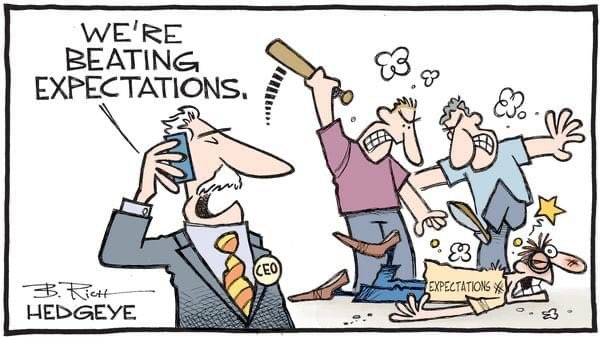
Why the stock market is beating expectations

Airbnb is not Uber and that's great news for Airbnb

Microsoft vs. Sony: The console battle and the gaming war